
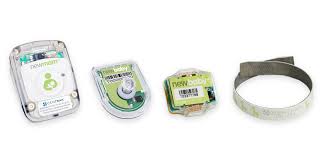
In the context of MEP and ICT, an IPS is an ELV
(Extra Low Voltage) system that integrates RFID (Radio Frequency
Identification) technology with physical security controls.
Here are the detailed technical and functional
aspects of an Infant Protection System.
1. Core Technology: RFID
Most modern IPS utilize active RFID technology.
Active RFID: The baby wears a small transmitter
(tag) that emits a signal continuously. This signal is picked up by sensors
(readers) installed in the facility.
Frequency:Typically operates on specific
frequencies (like 315 MHz or 433 MHz) designed to penetrate incubators and
blankets without causing interference to medical equipment.
2. Key Components
A. The Infant Tag (Transmitter)
Design: A small, lightweight, skin-friendly band
worn on the baby's ankle or wrist.
Tamper Detection: The tag contains a conductive
band. If someone tries to cut, tamper with, or forcibly remove the band, the
circuit breaks, triggering an immediate alarm.
Skin Contact: Advanced tags have a "Skin
Sense" feature. If the tag is removed from the baby's skin (e.g., placed
on a pillow while the baby is moved), the system detects the loss of skin
contact and alarms.
Comfort: Made of hypoallergenic, soft material
to prevent irritation to the newborn's delicate skin.
B. Exciters / Door Sensors
Location: Installed at all protected exits
(elevators, stairwells, main doors of the ward).
Function: These act as antennas. When a tagged
baby enters the magnetic field of an exciter, the tag wakes up and transmits
its unique ID to the system controller.
C. System Controller & Software**
Function: The "brain" of the system.
It receives signals from tags and sensors. It processes data to determine if a
baby is being moved legitimately or if it is an abduction attempt.
Dashboard: Displays a map of the ward with
real-time location of every infant. It logs events (tag application, alarms,
removal).
D. Output Devices (Alarms)
Local Alarm: Strobes and sirens at the specific
door where the breach occurred.
Central Alarm: Notifications at the nurse's
station, security office, and on handheld pagers/watches of staff.
3. Operational Features & Workflow
A.
Exit Monitoring (Abduction Prevention)
If a baby wearing an active tag approaches
a monitored exit, the door sensors detect the tag.
The system triggers:
1. Audible/Visual Alarms:
Immediate noise and flashing lights.
2. Door Locking: Magnetic
locks on the doors engage to prevent the door from opening.
3. Elevator Capture: The
elevator can be commanded to stop at the specific floor and hold the doors open
(or not move) until security arrives.
B. Mother-Baby Matching (MBM)
To prevent giving the wrong baby to
the wrong mother, the mother wears a matching tag (often a wristband).
When the mother attempts to breastfeed
or take the baby, a nurse uses a handheld reader to scan both tags.
The system confirms: Match (Green Light)or
Mismatch (Red Light).
C. "Chirping" Functionality
Sometimes tags are buried under blankets.
Nurses can press a button on the monitor or handheld reader to make a specific
tag "chirp" (beep), helping them locate the infant quickly for
feeding or checks without disturbing others.
4. Integration with Other Building Systems
(ICT/MEP)
An Infant Protection System is rarely a
standalone island; it must integrate with the building's infrastructure.
Access Control: If an alarm triggers, the IPS
can send a signal to the Access Control system to go into "Lockdown
Mode," securing all perimeter doors.
CCTV (Video Surveillance):Upon an alarm, the IPS
can trigger the specific CCTV camera near the door to start recording or pop up
on the security guard's monitor.
Nurse Call System: Alarms can be routed to the
existing Nurse Call consoles, eliminating the need for separate alarm units.
Fire Safety Integration: In the event of a fire
alarm, the IPS automatically disables (unlocks doors) to ensure safe evacuation
of the babies and staff.
5. Installation & MEP Considerations
Installing an IPS requires careful coordination
with civil and electrical teams.
Cabling: Requires low-voltage cabling (Cat6 or
specialized coax) running to door sensors and ceiling exciters.
Cable Containment: Conduit must be planned,
especially in NICUs where aesthetics and cleanliness are critical.
Antenna Placement: Exciters must be placed
precisely above doors to create the correct "field of detection." If
placed too wide, it might alarm babies passing in the hallway outside; too narrow
and it misses a baby being carried out.
Zoning: The facility is divided into "Green
Zones" (Safe area) and "Red Zones" (Exit areas). The software is
programmed to understand the geography of the ward.
6. Maintenance (AMC) Specifics for IPS
Since the safety of infants is critical, the AMC
for an IPS is rigorous.
Tag Testing: Testing the battery life and
skin-sensitivity of tags (usually done quarterly).
Sensor Calibration: Adjusting the sensitivity of
door sensors to ensure they don't trigger false alarms (from tags passing in
the corridor).
Battery Replacement: Ensuring disposable tags
are within their expiry date and reusable tags are recharged properly.
Software Updates: Updating the firmware to prevent hacking or
signal interference.
False Alarm Log Analysis: Reviewing logs to
adjust settings and eliminate nuisance alarms.
|
Summary Table |
|
|
Feature |
Description |
|
Primary Goal |
Prevent infant abduction & prevent
mother-baby mix-ups. |
|
Technology |
Active RFID (Radio Frequency Identification). |
|
Key Device |
Soft, tamper-proof ankle/wrist tag. |
|
Response to Threat |
Audio alarm, visual strobe, magnetic door
lock, elevator capture. |
|
Integration |
CCTV, Access Control, Nurse Call, Fire Alarm
System. |
|
Critical Requirement |
Zero interference with medical equipment
(pacemakers, incubators). |

AL BAYT 7 Tower Ground Floor Unit 3, P, Box: 12613
King Faisal bin Abdulaziz Al Saud Road Al Murabba Riyadh KSA.
Branches
Tadban/Hyderabad India,
2501 CHATHAM RD STE R SPRINGFIELD IL 62704 USA,
As Sawmhan / Barka / South Al Batinah Governorate Oman.

0535398660
0561657087
0115126975

Saturday -Thursday (9:00 AM - 6:00 PM)
Friday: Off